
Blackheads can be a real pain.
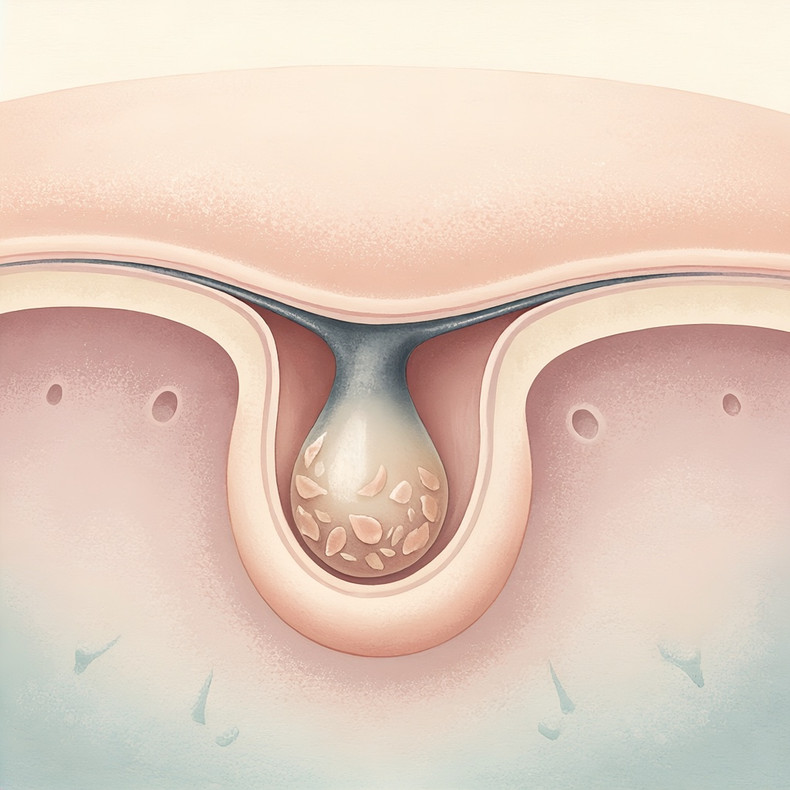
Blackheads are a type of acne that can appear on the face, neck, chest, and back. They form when a pore becomes clogged with oil and dead skin cells. When that material is exposed to air, it oxidizes and turns dark—creating the “black” in blackhead.
So why do some people get more of them?
Excess oil production can play a role. Hormonal changes can, too, which is why blackheads may become more noticeable during puberty, pregnancy, perimenopause, or with hormonal conditions such as PCOS.
Your skin care routine matters, too. Heavier products—or simply layering too many products—may contribute to clogged pores, particularly if your skin is already prone to them.
What can you do? Start with good cleansing. Our Pumpkin and Green Tea Cleanser helps remove excess oil without stripping the skin. Removing excess oil, makeup, sunscreen, and daily buildup helps keep pores from becoming congested.
And here's another ingredient worth knowing about: retinoids.
Retinoids help regulate skin-cell turnover, which can help keep dead skin cells from accumulating and clogging pores. Adapalene, for example, is a well-established topical retinoid used for acne and clogged pores.
Our Skin Cell Renewal Retinoid Gel contains oleyl adapalenate, also known as adapinoid—a newer third-generation retinoid and precursor to adapalene.
And there's some interesting research behind it. In a randomized clinical trial, oleyl adapalenate was compared directly with retinol. It improved several measures of photoaging, including wrinkle severity and pigmentation (the pigmentation change was similar to retinol), and was better tolerated than retinol. The study did not test this product or blackheads.
That's particularly interesting to us because one of the problems people often have with traditional retinoids is irritation.
If you're pregnant and want to treat acne, ask your obstetrician or dermatologist before using an acne treatment.
So if blackheads and clogged-looking pores are bothering you, don't just attack what's already there.
Think about what you're putting on your skin—and what may help keep those pores from becoming congested in the first place.